OUR FAVORITE “BOB-ISMS”—HOW BOB SWANEY DRIVES FUNDRAISING SUCCESS
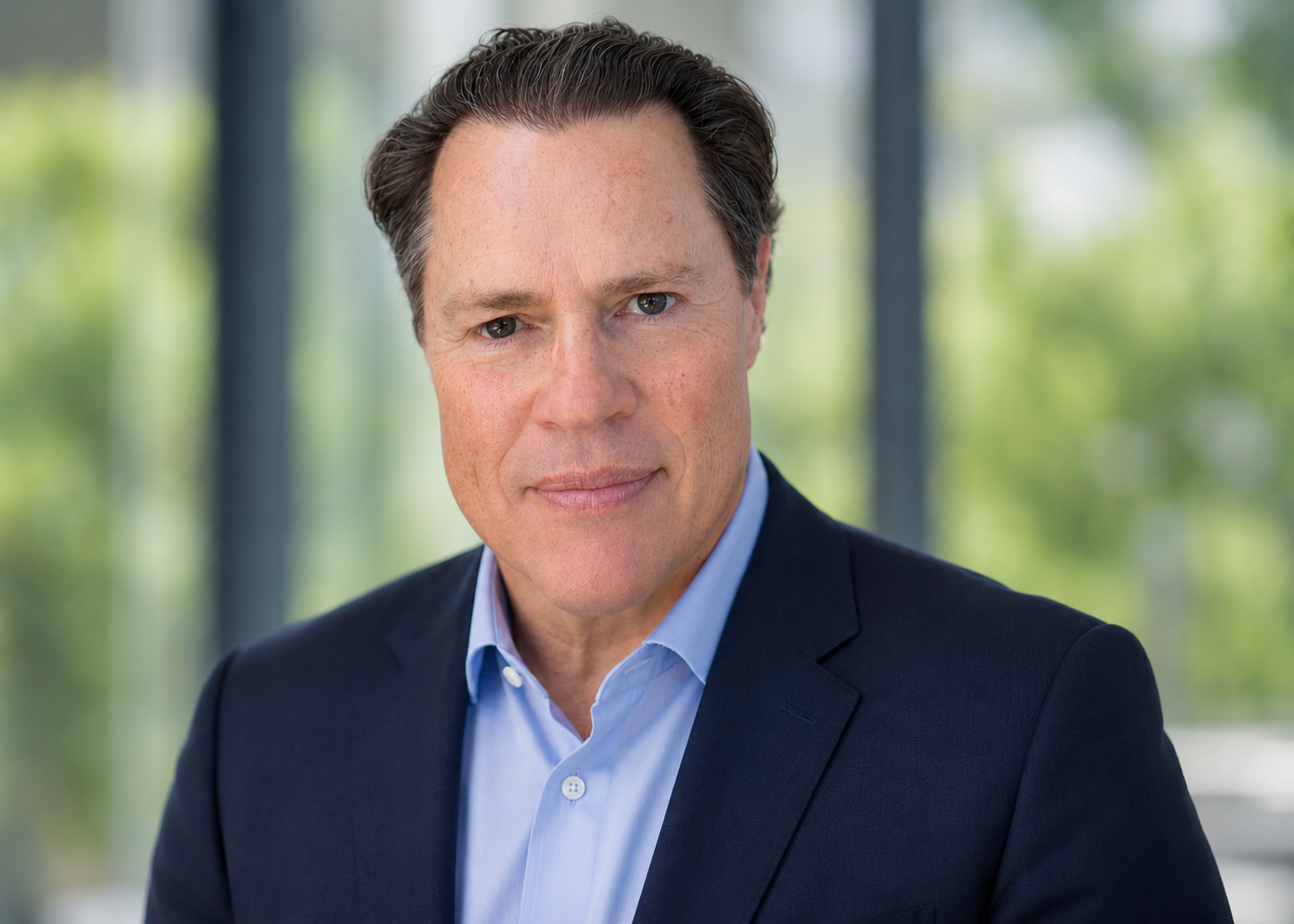
With Catherine Heitz New & Bob Swaney


Some fundraising advice sticks because it is clever. Better advice sticks because it works.
That is why Bob Swaney’s “Bob-isms” have stood the test of time at RSC Associates. While they are short, plainspoken, and easy to remember, their real value is what sits underneath them: a disciplined approach to fundraising.
In the latest episode of Fundraising Growth Now!, Bob joins Catherine Heitz New to talk through the “Bob-isms” that have shaped RSC’s counsel for decades, and why they continue to hold up.
Read the full transcript below or click the button to listen.
OUR FAVORITE “BOB-ISMS”—HOW BOB SWANEY DRIVES FUNDRAISING SUCCESS
Some advice sticks because it is clever. Better advice sticks because it works.
Over the years, I have found myself repeating what we at RSC often call “Bob-isms,” those plainspoken one-liners from RSC Founder Bob Swaney that somehow manage to cut through a complicated fundraising challenge in one sentence. They make us smile, yes. But they have lasted because they are more than slogans. They are shorthand for a comprehensive and highly successful approach to fundraising.
At their best, Bob-isms bring us back to fundamentals: clear leadership, disciplined relationship-building, strong donor development, thoughtful stewardship, and honest decision-making. In a fundraising environment that rewards trust, consistency, and follow-through, those fundamentals matter more than ever.
Here are the Bob-isms I carry with me:
BOB ON LEADERSHIP AND ACCOUNTABILITY
1. “The fish stinks at the head.”
Bob is the first to admit this one is a little tongue-in-cheek. But there is an important truth behind it: organizational success and challenges alike often start with leadership. In arts organizations, that means the Board, staff, volunteers, and artistic leadership all play a role. When leaders are actively engaged in fundraising—building relationships, stewarding donors, reinforcing accountability, and making philanthropy a priority—the entire organization is stronger for it. Fundraising is not something the Development staff does in a silo. It is a shared leadership responsibility and a reflection of the values and priorities embraced throughout the organization.
2. “Not every Board member should be involved in the act of fundraising, but every Board member should be involved in the process of fundraising.”
This might come as a surprise, but Bob does not believe every Board member should make gift Asks. Most organizations need a limited number of informed, confident, and coached Board and staff members to serve as Askers. To be clear, that does not mean everyone else is a bystander. All Board members should help identify prospects, cultivate relationships, steward donors, open doors, thank supporters, and make philanthropy part of the organization’s culture. Everyone plays an essential role in the process of attracting and retaining donors.
3. “The Annual Fund doesn’t define an organization; it’s a reflection of the organization.”
Fundraising is not a salve that fixes every organizational problem. When fundraising is struggling, there are often larger issues beneath the surface. The organization may not be delivering a compelling artistic product. It may not be viewed as an essential community asset. It may not be building strong relationships throughout the community. It may not be operating with clear priorities or sound financial discipline. The order matters. Fundraising alone does not fix a weak organization. But strengthening the organization can dramatically improve the Annual Fund and every fundraising effort that follows.
BOB ON DONOR STRATEGY AND PIPELINE HEALTH
1. “Get donors, keep donors, upgrade donors.”
Bob has a gift for boiling the donor cycle down to its simplest form. First, you get donors. They do not have to make large gifts. They do not have to make multi-year commitments. They just have to say yes. Then you keep donors through stewardship, engagement, shared experiences, and a relationship that gives them confidence in their decision to support the organization. Then, when the relationship has deepened, some donors will be ready to upgrade. That movement is the key to a healthy donor pyramid. If organizations do not keep donors, the base erodes. And if the base erodes, there is no one to upgrade.
2. “It’s not about how many donors you get, it’s about how many you keep.”
Once you embrace #1, you’re ready to take your understanding of the donor cycle to the next level: Yes, acquisition is important. You have to get donors before you can keep them. But getting donors is expensive and time-consuming. If a donor disappears the following year, the organization has lost time, money, and relationship potential. Retention is where momentum starts. Keeping donors is generally less expensive than acquiring new ones. It creates more predictable revenue and allows the donor to go on a genuine journey with the organization. The ultimate goal is not securing the first gift. It is bringing donors close enough that they welcome the opportunity to give again.
3. “There’s a big difference between hunting and fishing. Focus on fishing.”
Hunting is about pursuit. It treats donors as something to be stalked, tracked down, and forced to give. The focus is on the transaction, the Ask, and the outcome. Donors can feel the pressure, and while hunting may produce a gift, it rarely creates lasting loyalty. Fishing is different. Fishing is attraction. It means creating an arts organization that people are naturally drawn toward because they believe in the work, value the impact, and want to be part of the story. It is built on curiosity, patience, conversation, and trust. The goal is not to corner someone into giving. The goal is to create the kind of connection that makes them want to stay, engage, and invest over time. More fishing, less hunting.
4. “People give for one of three reasons: how it benefits the arts organization, the community, or themselves, personally.”
This is one of the most practical Bob-isms because it gives fundraisers a simple way to think about donor motivation. Some people give because they love the organization: the artists, the art form, the performances, the exhibitions, the mission, or the people who make the work possible. Others give because they care mostly about the health of the community. They may not be deeply attached to the art form, but they believe the organization makes the city or region stronger. Finally, some give because of what the gift makes possible for them: access, experiences, connection, or a deeper sense of belonging. These are all worthy motivations. Knowing which matters most to each donor will help you build customized, stronger donor relationships in ways that matter.
BOB ON PERFORMANCE AND DISCIPLINE
1. “You’re either making money or you’re making excuses. You can’t do both in the same space.”
This one is blunt. And it's spot on. When fundraising falls short, explanations start to pile up: “This is not a giving community.” “They do not want to meet with us.” “The foundation cut its budget.” Some of these challenges may be real. But sometimes they are self-imposed barriers. Conversely, when goals are being met, no excuses are necessary.
If your organization is missing its fundraising goals, use Bob’s clarifying question: “Is this a community-wide thing, or is this a ‘you’ thing?”
If other non-profit organizations in the community are reaching their fundraising goals, look inward to see why yours isn’t, and then address those issues. The issues can range from fundraising to artistic to community perception. But rest assured, if other non-profits are healthy and strong, and yours isn’t, it is probably you. The good news is you can address the “you” issues so that fundraising becomes more productive.
2. “Focus on high-leverage, high-return activities.”
Busy is not the same as productive.
Bob uses this phrase to bring leaders back to the activities that matter most at the right time. That does not mean only focusing on major gifts. It means understanding the rhythm of the fundraising year and giving each activity its proper timing, attention, people, and message. When early work gets delayed, it does not disappear. It crashes into later work and creates a ripple effect. High-leverage, high-return activity means doing the right work, in the right order, at the right time, and with the right people.
BOB ON MINDSET AND JUDGMENT
1. “Obsession with other people’s money is a fool’s venture.”
Every organization has had some version of this conversation: “What if we could just get to that ‘one’ wealthy family?”
Bob’s caution is that wealth is not the same as relationship. A person with no connection to the organization, no interest in the work, and no reason to care is rarely the best place to focus precious fundraising energy. Money equals capacity, not propensity. The bigger risk is that organizations chase the person outside the family while neglecting the people already close to them. Those current donors and prospects already know the organization, like it, trust it, attend its programs, or understand its value.
2. “Only do what only you can do.”
Every leader, staff member, Board member, and volunteer has work they are uniquely positioned to do. The problem is that experienced people often drift into work someone else could do, especially when they enjoy it or want control over it. Meanwhile, the thing only they can do goes undone. This Bob-ism is about discipline and trust. Do your work. Coach others well. Let responsible people carry their responsibilities.
3. “Focus on the things you can control and influence, while adapting to or rejecting everything else.”
This came into sharp focus during COVID, when so many organizations were overwhelmed not only by real challenges, but by endless “what ifs.” Bob’s point is not to ignore reality. Rather, he encourages arts leaders to stop giving energy to things they cannot control. In fundraising, you can often control or influence stewardship, messaging, timing, follow-up, relationship strategy, donor experience, Board engagement, and staff discipline. You cannot control every economic factor, every donor decision, or whether another organization receives a major gift. There is plenty within reach to focus your time and energy on.
BONUS BOB-ISM
“If we had to do this, how would we do it?”
This is my favorite question to ask when feeling stuck. When a new idea meets resistance, Bob does not ask people to accept it immediately. He asks them to suspend judgment long enough to explore it honestly. For 10 or 20 minutes, stop debating whether the idea should become reality. Pretend it has to become reality and ask how. That shift can reveal possibilities that may have been reflexively shut down. Fair warning, it will reveal plenty of impossible ideas as well. The point is not to say yes to everything. The point is to boldly generate ideas and give them a fair hearing before deciding.
Why These Bob-isms Stand the Test of Time
What I appreciate most about Bob-isms is that they are not just clever lines. I think of them as a system. Leadership sets the ceiling. Strategy drives the money. Discipline delivers the results. Mindset determines the decisions.
That is why these sayings continue to be useful. They bring us back to the work that actually strengthens fundraising: knowing donors, keeping donors, stewarding well, Asking with care, using leadership wisely, and refusing to confuse activity with progress. In a noisy environment, the fundamentals still hold. And sometimes the clearest path forward starts with a sentence simple enough to remember when the work gets hard.
Do some of these Bob-isms resonate with you? Schedule a 30-minute conversation with me to discuss where you are, what may be getting in the way, and practical next steps to strengthen your fundraising.